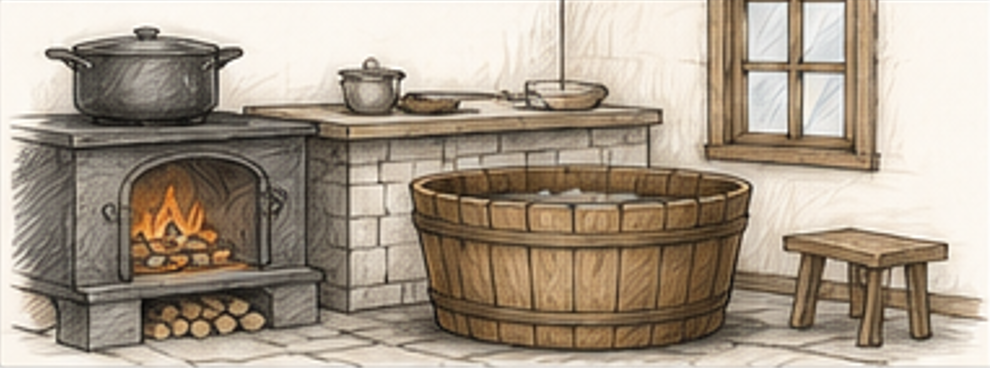
The modern bathroom is something most of us take for granted. Yet the private, fully plumbed bathrooms found in today's homes have only been common for around a century. Before indoor plumbing became widespread, bathing was often a weekly ritual, with portable tubs brought into the kitchen and filled with heated water from the stove for the entire family to share.
The history of bathrooms stretches back thousands of years, reflecting advances in engineering, public health, and changing attitudes toward cleanliness and comfort.
Bathrooms in Ancient Times
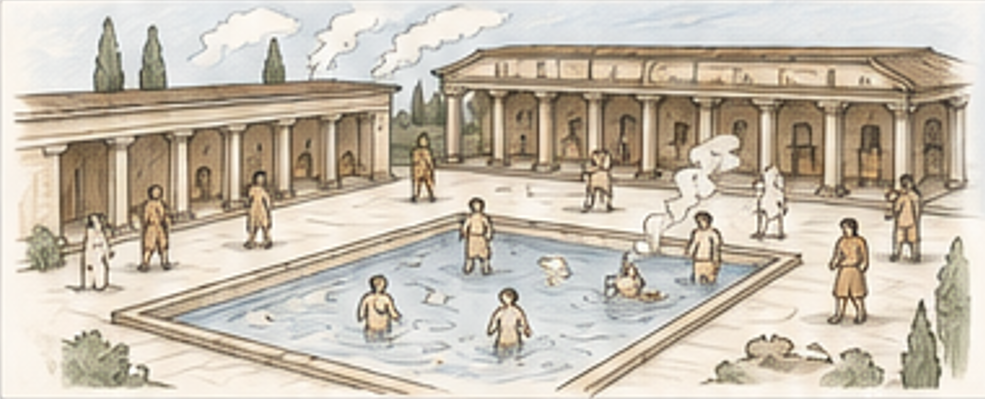
The earliest evidence of bathing dates back to around 3000 BC. In many ancient cultures, water was valued not only for personal cleanliness but also for religious purification. People often washed before entering temples or participating in sacred ceremonies, believing water cleansed both the body and the spirit.
Bathing customs varied across civilizations. Cold-water bathing was more common in parts of Asia, while steam baths became popular throughout Europe and later the Americas. Many communities built communal bathhouses away from living areas, partly for practical reasons and partly because of cultural beliefs surrounding cleanliness and spirituality.
The First Plumbing Systems
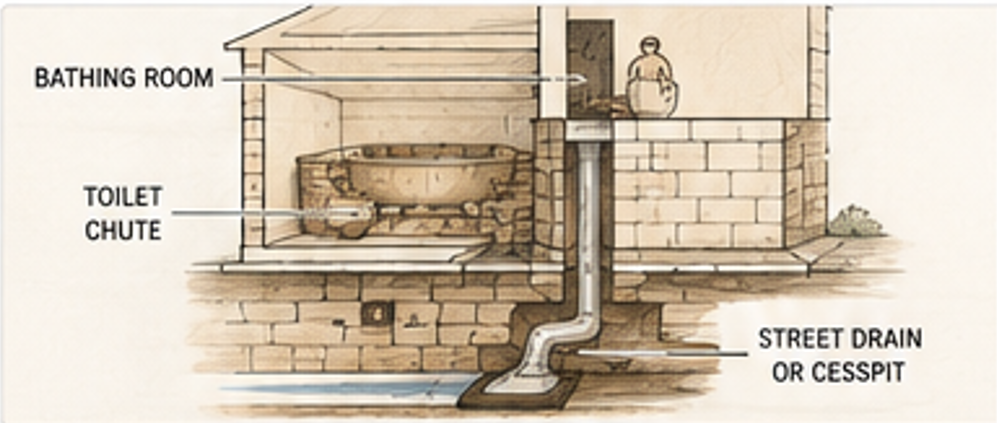
Some of the world's earliest known bathrooms and drainage systems appeared in civilizations such as the Indus Valley and Mesopotamia. Around 2800 BC, many homes featured dedicated bathing areas with brick floors, while wastewater drained through pottery pipes into covered street drains or cesspits.
Early toilets were remarkably advanced for their time. Waste was carried away through vertical chutes connected to drainage channels, demonstrating that sanitation was already becoming an important part of urban planning.
One of the earliest bathtubs resembling modern designs was discovered in the Palace of Knossos on the Greek island of Crete, dating to approximately 1700 BC. Its shape and surrounding plumbing would look surprisingly familiar today.
Greek Innovation
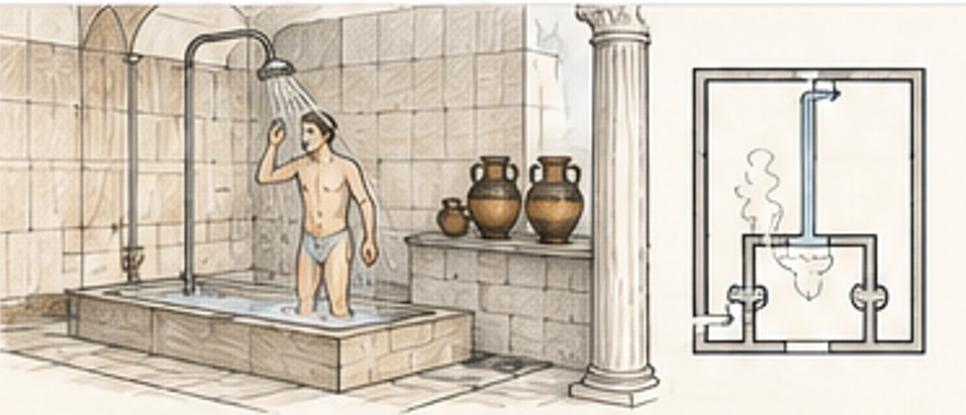
The ancient Greeks viewed bathing as an essential part of a healthy lifestyle. Cities such as Pylos and Tiryns featured bathrooms with water supply and drainage systems, while artwork suggests that early shower-like bathing methods were also used.
Greek literature frequently references bathing. Homer described heroes restoring themselves in warm baths after battle, while mythology tells of Achilles being bathed by his mother in an attempt to make him invincible. Archaeological discoveries across Greece have revealed palaces with dedicated bathing rooms, clay bathtubs, and sophisticated drainage systems.
Roman Baths: More Than Hygiene
The Romans transformed bathing into a social institution.
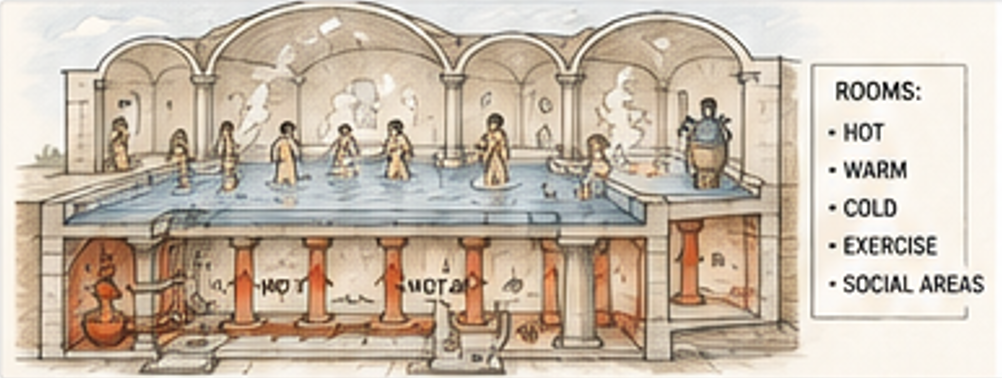
By the 3rd century BC, wealthy Romans had elaborate private baths within their villas, complete with hot, warm, and cold rooms. Their buildings were heated using the hypocaust, an underfloor heating system that circulated hot air beneath floors and inside walls.
Even more impressive were the enormous public bath complexes, known as thermae. These facilities served as places to bathe, exercise, relax, conduct business, and socialize. Many included libraries, gardens, shops, and entertainment, making them important centers of everyday Roman life.
The Middle Ages and the Changing View of Bathing
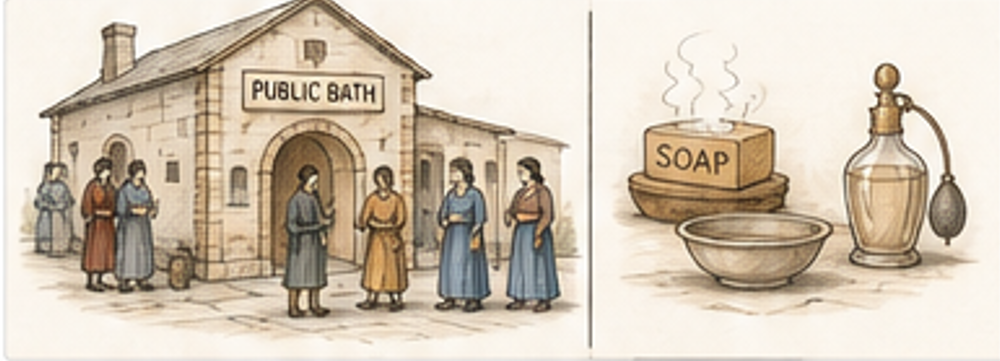
Although public bathing changed after the fall of the Roman Empire, it did not disappear. Soap production expanded during the Middle Ages, and public bathhouses continued to operate across much of Europe for centuries.
Attitudes shifted more dramatically after the Renaissance. As diseases spread across Europe, many people came to believe that bathing in water could increase the risk of illness by opening the pores. Dry washing, sweat baths, and heavy perfumes became more common, while public baths gradually declined and private washing spaces became increasingly desirable.
The Birth of the Private Bathroom
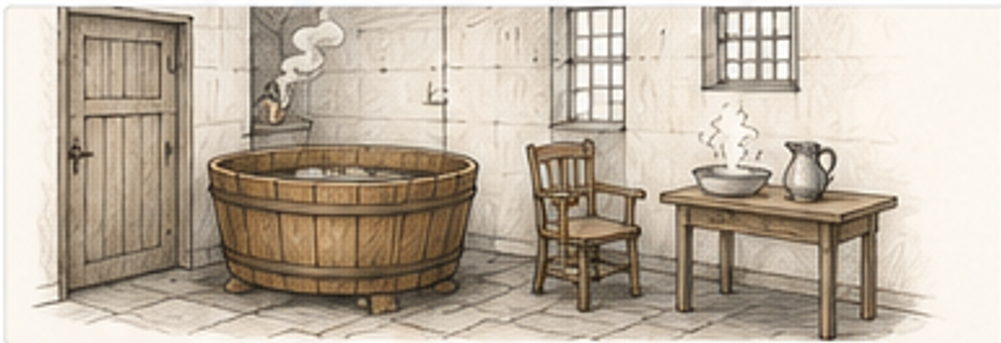
One of Britain's earliest recorded private bathrooms dates to the mid-17th century. It was discovered in an outbuilding at Bolsover Castle in Derbyshire, where Sir William Cavendish helped popularize dedicated "bathing rooms" following the English Civil War.
These early bathrooms remained a luxury for the wealthy, but they marked the beginning of a shift toward private bathing within the home.
The Industrial Revolution and the Modern Bathroom
The greatest transformation came during the late 19th century.
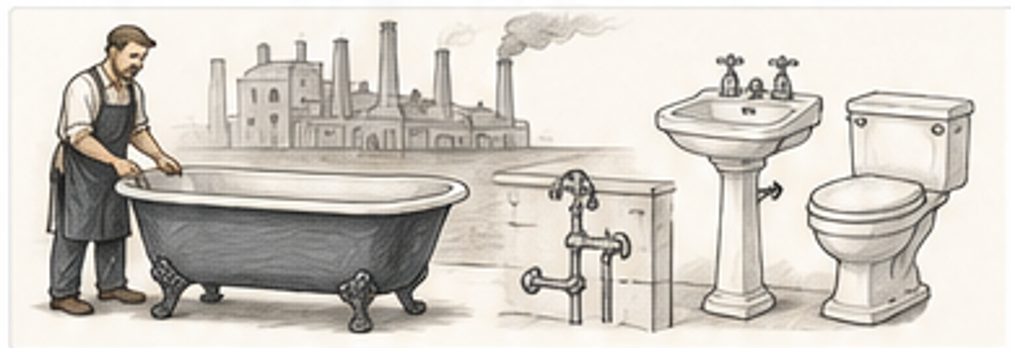
As cities expanded and indoor plumbing improved, running water, sewer systems, and mass-produced fixtures became increasingly available. Bathrooms evolved from luxury spaces into practical household necessities.
One important milestone came when John Michael Kohler, founder of Kohler Co., adapted a cast-iron horse trough by coating it with enamel and adding decorative legs, creating one of the first commercially successful bathtubs for the home.
Advances in plumbing, water heating, and manufacturing allowed complete bathroom suites to become widely available, making daily bathing far more convenient and private than ever before.
Bathrooms Today
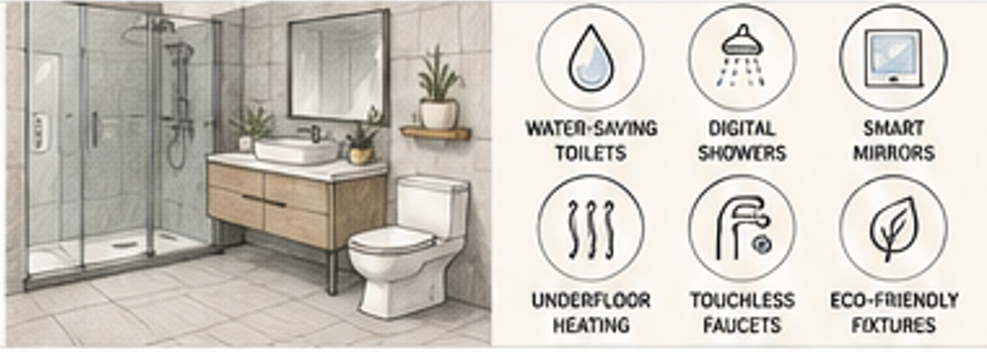
During the 20th century, indoor bathrooms became standard in homes across much of the world. Flush toilets, reliable hot water, showers, ceramic fixtures, and improved sanitation dramatically changed everyday life and helped improve public health.
Today's bathrooms continue to evolve with innovations such as water-saving toilets, digital showers, underfloor heating, smart mirrors, touchless faucets, and eco-friendly fixtures. Modern bathroom design now balances comfort, efficiency, accessibility, and sustainability alongside personal style.
From Necessity to Sanctuary
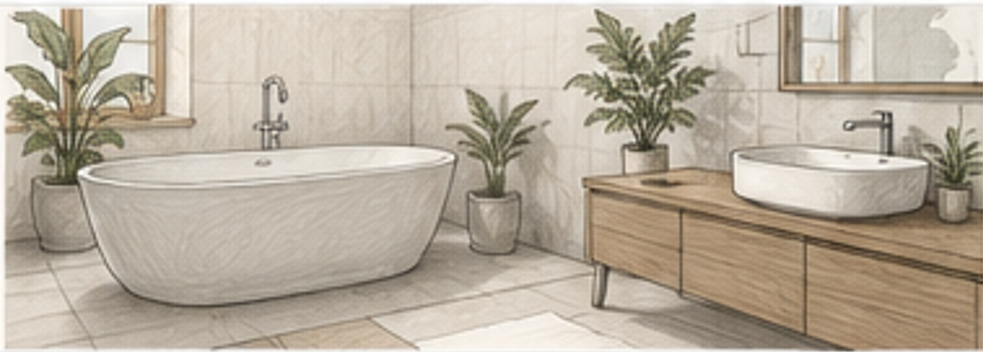
Over thousands of years, the bathroom has evolved from a simple place for ritual cleansing into one of the most comfortable and technologically advanced rooms in the home. What was once a communal necessity is now a private space designed for relaxation, wellness, and everyday convenience—a remarkable transformation that reflects the history of civilization itself.